


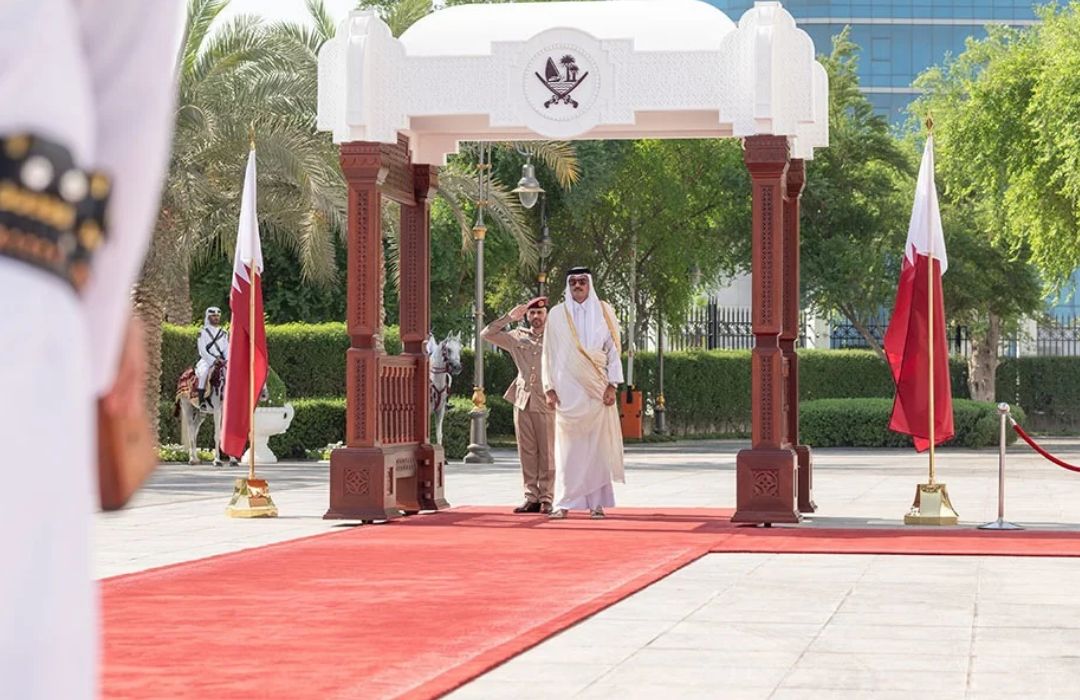
Doha,
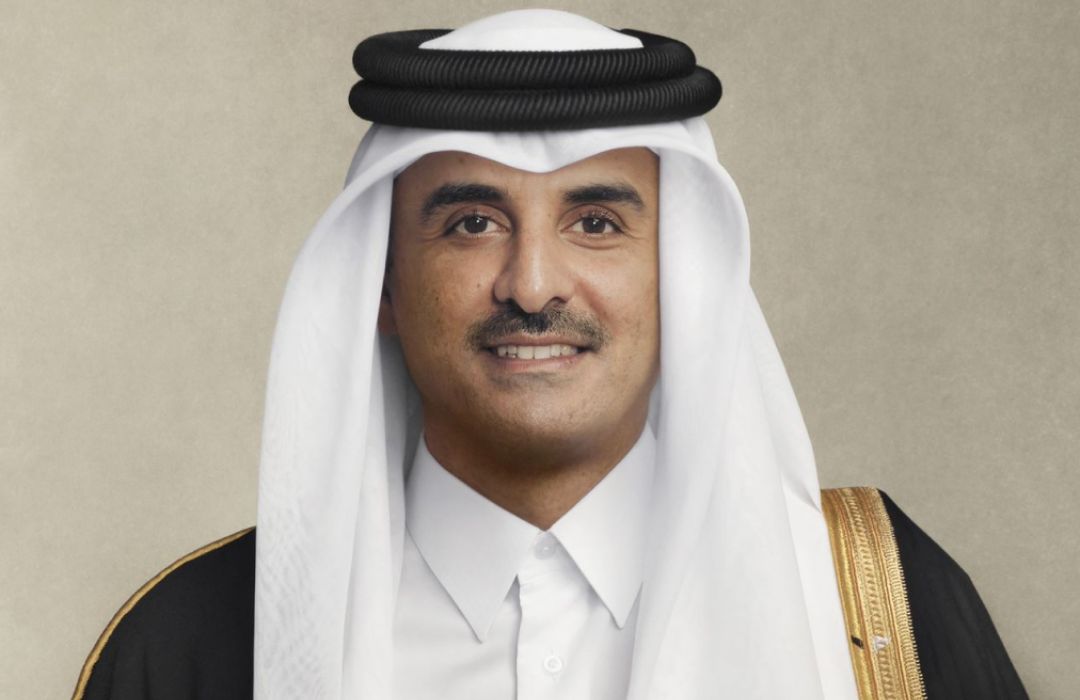
Qatar: The Amir HH Sheikh Tamim bin Hamad Al-Thani patronized the inauguration
of the second ordinary session of the second legislative term, corresponding to
the 55th annual session of the Shura Council, held this morning at Tamim bin
Hamad Hall at the Council’s headquarters in Doha.
The
inauguration was attended by HH Sheikh Jassim bin Hamad Al-Thani, the Personal
Representative of HH the Amir; HH Sheikh Abdullah bin Khalifa Al-Thani; HH Sheikh
Mohammed bin Khalifa Al-Thani; and HE Sheikh Jassim bin Khalifa Al-Thani. Prime
Minister and Minister of Foreign Affairs HE Sheikh Mohammed bin Abdulrahman bin
Jassim Al-Thani, along with several sheikhs, ministers, heads of diplomatic
missions accredited to Qatar and other dignitaries, also attended the ceremony.
HH the Amir delivered a speech on the occasion.
"In the Name of Allah, the Most Gracious, the Most Merciful
Brothers and Sisters,
I am pleased to open the
fifty-fifth annual session of your esteemed Council, looking forward to the
Council continuing to carry out its constitutional responsibilities in a spirit
of constructive cooperation, and to its deliberations contributing to the
development of legislation, in a manner that serves the public interest.
On this occasion, we recall,
with hearts filled with faithfulness, the journey of our dear father, HH the
Father Amir, Sheikh Hamad bin Khalifa Al-Thani, may his soul rest in peace, who
passed away to the mercy of Allah this year after a life devoted to serving his
country and nation. He led his people through a pivotal period in Qatar’s
history, marked by a comprehensive renaissance across various developmental
fields, the strengthening of state institutions, the stabilization of national
decision-making, the empowerment of women, and Qatar’s active presence on the
global stage. His belief in the Qatari people was the foundation of his vision.
He invested in their education and capabilities, and provided them with the
means to contribute effectively to the progress and development of their
country. The truest way to honor his legacy is to safeguard the achievements he
established and the enduring legacy he left deeply rooted in our hearts and in
the memory of our nation. May Allah reward him abundantly for all that he did for
Qatar, its people, and his nation, and may He grant him a place in the vastness
of His eternal Paradise.
Brothers and sisters,
We meet this year in the wake of
extraordinary events that have impacted both our country and the region. These
events have once again demonstrated the strength of our state institutions, the
cohesion of our society, and our ability to respond to crises efficiently and
responsibly. I would like to commend our citizens and residents for the
awareness and solidarity they demonstrated during the events that our country
experienced in recent months. I would also like to commend our state
institutions, our armed forces, and our security agencies, which stood
ready-not merely to absorb the shock, but to confront and manage it with courage
and competence. The bond between the Qatari people and this blessed land was
not forged by affluence; rather, it was shaped by generations through their
struggle against hardship, the harshness of the geography, and the scarcity of
resources. It is a bond of loyalty, a testament to their resolve, and a
defiance of the impossible—forged by our early leaders as our people rallied
around them. Our determination to build our homeland and safeguard our people’s
achievements is steadfast and unbreakable.
In this crisis, Qatar has
shouldered three responsibilities simultaneously: protecting its sovereignty,
fulfilling its role in energy security and the global economy, and keeping the
doors of diplomacy open. Our strategy for shouldering these responsibilities consisted
of four key elements: first, defending the homeland firmly without being drawn
into war; second, maintaining essential services, supply chains, and economic
activity; third, contributing to efforts to secure a ceasefire and reopen
waterways; and fourth, urging negotiations and seeking opportunities to return
to talks to reach peaceful resolutions to the conflict.
Brothers and sisters,
Qatar supplies approximately
one-fifth of the world’s liquefied natural gas trade, and any disruption
affecting it is quickly reflected in markets and consumers everywhere. The
closure of the Strait of Hormuz, together with the direct damage inflicted on
some energy facilities in Ras Laffan Industrial City, disrupted a significant
portion of the country’s exports. However, the impact of these economic
developments was primarily concentrated in the energy sector, while we ensured
that the non-hydrocarbon sectors continued to grow, with their contribution
reaching approximately 80% of real GDP. This reflects the resilience of the
national economy and its ability to sustain growth under exceptional and
complex circumstances.
From the very outset of the
crisis, the state placed protecting people, securing their needs, and boosting
economic activity at the forefront of its priorities. Its institutions, in
cooperation with the private sector, worked to diversify supply routes and
secure essential goods and strategic reserves. The national economy confronted
this crisis from a position of strength. In 2025, it achieved real growth of
2.9%, while the average annual inflation rate remained at 0.5%, backed by a
current account surplus. The State maintained its high sovereign credit
ratings, while the stock of foreign direct investment continued to grow.
It is only natural that the crisis
would have a negative impact on public finances, as the total revenues declined
by 42% during the first half of the year, while public expenditure fell by 14%,
without compromising essential services or development priorities. This should
not be taken for granted and deserves due recognition. The State did not
succumb to panic; instead, it continued to look to the future with confidence
in the national economy. We decided not to reduce essential services and opted
to maintain our developmental priorities, in order to sustain Qatar’s ongoing
economic momentum.
The policies adopted by the
State prior to the crisis-including strengthening reserves, reducing public
debt, budgeting based on conservative oil price assumptions, and developing
non-oil revenues-have enabled us to absorb the repercussions of this crisis
thus far. However, this strategy requires sustaining fiscal discipline,
elevating public spending efficiency, and assessing programs based on their
actual impact on society and the economy. Our aim is not to return to the
pre-crisis situation, but rather to use the recovery as a springboard to
accelerate economic diversification and strengthen national capabilities.
We have a portfolio of projects
and investment opportunities valued at approximately QR221 billion over the
next five years. This includes infrastructure projects, such as public-private
partnerships, alongside private-sector investments in the real estate and
hospitality sectors. This crisis has reaffirmed the soundness of the direction set
out in the Third National Development Strategy; the very reforms that enhance
economic competitiveness under normal circumstances are the same ones that
strengthen its resilience in times of adversity. We look to your esteemed
Council to support this phase by enacting legislation that strengthens the role
of the private sector and enhances the attractiveness of the investment
environment. God willing, Qatar will emerge from this crisis more resilient and
better equipped to adapt to global changes. Our duty is to always strive for
the best, but we must also be prepared for the worst-case scenarios, and
everyone-institutions and citizens alike-must take responsibility.
In the energy sector, work on
the expansion of the North Field Gas project is progressing according to the
set plans, with the aim of increasing the country’s LNG production capacity.
The Golden Pass project in the United States has also made significant
progress, while QatarEnergy continues to expand its investments and
international partnerships, alongside the development of petrochemical
industries, solar energy projects, and efforts to strengthen water security.
In the field of food security,
Qatar ranked first regionally in the 2026 Food System Resilience Index. Support
for local agricultural production continues, alongside the development of
storage and transport, waste reduction, and adherence to economic efficiency
and quality standards.
Brothers and sisters,
Investing in human capital is
the foundation of national progress; it is both the ultimate goal of
development and its primary means. Qatari educational institutions have made
remarkable progress, including Qatar University, the universities of Education
City, and other higher education institutions. We are following the development
of the education sector in the country closely and attentively, including both
public and private schools, and meeting the necessities of people with special
needs. Educational institutions must equip the youth with the skills required
by the labor market, as well as the thinking and cultural awareness necessary
to face the challenges of our time. Keeping up with modern science and
technology must also go hand in hand with strengthening the status of the
Arabic language and reinforcing the values of national identity.
In the course of digital
transformation, more than 360 new digital services have been developed. The
central database project has also moved into the practical integration phase,
becoming a unified and reliable national source for policy-making and
performance measurement. We have directed that inter-agency connectivity be
completed, data standards be unified, and privacy be protected. Administrative
efficiency cannot be achieved without clear accountability. The implementation
of a results-based performance evaluation and output quality system has already
started. Administrative leaders must assume responsibility for empowering
employees, sharing knowledge, preparing the next generation of leaders, and
linking promotion and professional development to achievement, efficiency, and
equal opportunities. It is important that these policies not be applied merely
as a formality, leaving achievement and efficiency unchanged; what’s required
is integrity in the evaluation process. No policies or systems can replace
integrity in evaluation and work ethics.
Brothers and sisters,
Qatar was attacked on its
territory by Iran, in a blatant violation of its sovereignty, the provisions of
international law, and the principles of good-neighborly relations. Our armed
forces and security agencies fulfilled their duty to defend our homeland. One
might take the normal course of daily life for granted, despite the raging war.
Yet, it is our duty to remind ourselves and remember that this would not even
have been conceivable if it weren’t for Allah and then our armed forces, who
worked around the clock to defend our airspace, land, and waters, or without
more than a decade of sustained efforts in preparation, readiness, training,
and equipping. Resilience isn't born in the moment of crisis; rather, it is the
result of the planning that precedes it. By the grace and mercy of Allah, we
have been able to stay strong in the toughest times and emerge from every
crisis stronger, more resilient, more determined and more steadfast.
We also want to emphasize on
this occasion that our commitment to dialogue and peaceful solutions does not
mean being complacent about defending our country. Likewise, our right to
defend our sovereignty does not conflict with our determination to prevent a
wider war. You know, and everyone knows, that Qatar has always preferred to
resolve disputes through dialogue, negotiation, and diplomatic means. This has
always been our stance, and it remains so.
These unfortunate events have
once again underscored that the security of the region and the world is
interconnected, and that destabilization anywhere cannot be isolated from the
rest of the world. They also highlighted the necessity of continued cooperation
and coordination among the member states of the Gulf Cooperation Council. The
security of the GCC states and the protection of their sovereignty and
stability are non-negotiable. This requires us to redouble our efforts to
secure navigation in the Gulf and the Strait of Hormuz, and to protect energy
and water facilities, as well as civil infrastructure. We will continue working
with our brothers and international and regional partners to keep our region
stable and safe.
The Palestinian cause remains at
the top of our priorities, and we affirm that what has happened in the Gaza
Strip is undoubtedly a genocide, and those responsible must not escape
accountability. We warn of the dangers resulting from Israel's ongoing aggressive
practices against the brotherly Palestinian people, most recently the attacks
by settlers against Palestinians in the West Bank under army protection, not to
mention the repeated raids on the Al-Aqsa Mosque, and countless violations of
the provisions of international law, the UN Charter, and international
humanitarian law.
We reiterate our firm position
on finding solutions to the region's crises in Sudan, Libya, Yemen, and Somalia
through necessary political agreements that are comprehensive and fair,
preserving the unity and integrity of the territories and achieving the
peoples' interests in security and stability.
In conclusion, experience has
demonstrated that the resilience of the state relies on preparedness, a
diversified economy, the efficiency of institutions, social solidarity and
individual responsibility. The national challenges and shared tasks require
everyone to perform their duties well, safeguard public funds, and place duty
and the public interest above any other consideration. May Allah guide us all
to what is good for Qatar and its people. May the peace, mercy and blessings of
Allah be upon you."