


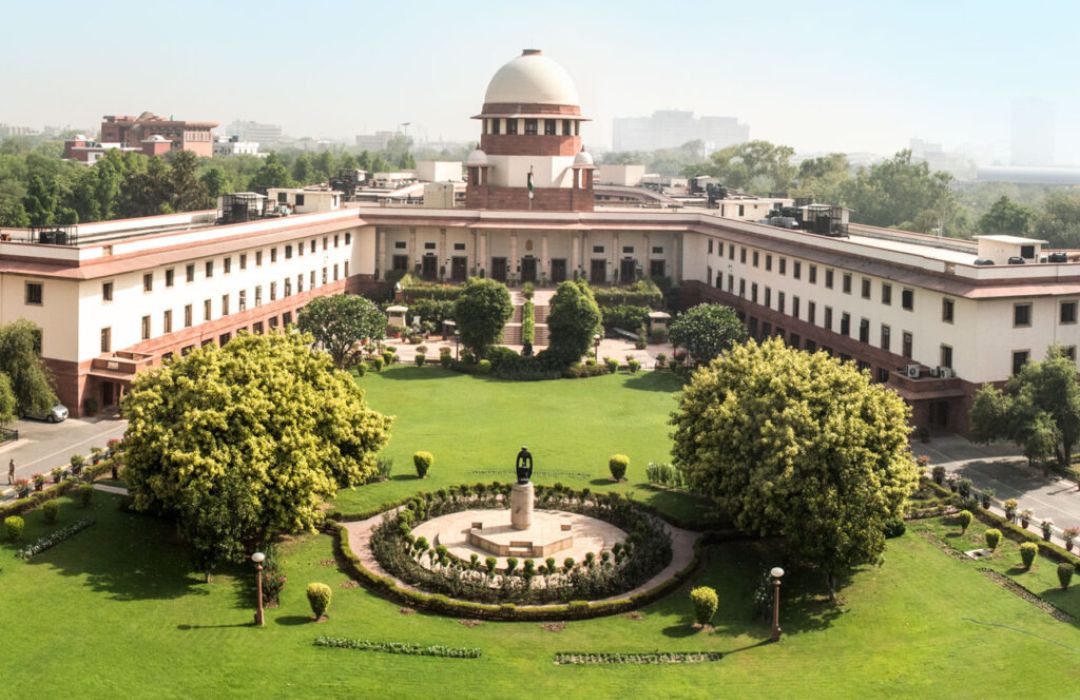
New Delhi: The Supreme Court has issued a series of urgent and wide-ranging directions to address the alarming rise in student suicides in Higher Educational Institutions (HEIs) across the country, stressing that universities and colleges must take immediate and proactive responsibility for student welfare.
A Bench comprising Justice JB
Pardiwala and Justice R Mahadevan passed the directions while hearing a
petition filed by the parents of two IIT Delhi students, who allegedly died by
suicide due to caste-based discrimination and intense academic pressure. The
Court made it mandatory for institutions to promptly register a First
Information Report (FIR) in the event of a student’s suicide.
Expressing deep concern, the
Court observed that delays in scholarship disbursement, inadequate mental
health support systems, excessive academic pressure, discrimination, and
administrative lapses are key contributors to the crisis. It referred to the
findings of the National Task Force (NTF), constituted on March 24, 2025, to
examine mental health challenges and suicide trends among students in higher
education.
Based on the NTF’s
recommendations, the Supreme Court directed the following measures:
Centralised data collection
Maintain accurate and centralised data on suicides among students aged 15–29
years under the Sample Registration System, with assistance from public health
and demographic experts.
Clear categorisation of data:
Ensure that the National Crime Records Bureau (NCRB) distinctly categorises
school students and higher education students in its annual suicide statistics.
Mandatory police reporting
Immediately report every case of student suicide or unnatural death to the
police, irrespective of whether it occurs on campus, in hostels, paying guest
accommodations, or elsewhere, and regardless of the mode of study-regular,
distance, or online.
Annual reporting to regulators
Submit an annual report of all such cases to the University Grants Commission
(UGC) and other relevant regulatory bodies, including AICTE, NMC, DCI, and BCI.
In the case of Central Universities and Institutes of National Importance,
reports must be submitted to the Department of Higher Education.
Round-the-clock medical care
Ensure that all residential HEIs have 24×7 access to qualified medical assistance,
either on campus or within a one-kilometre radius.
Faculty recruitment
Fill all vacant teaching and non-teaching posts within four months,
prioritising positions reserved for marginalised and underrepresented
communities, including persons with disabilities. Special recruitment drives
must be conducted where necessary.
Administrative appointments
Appoint Vice Chancellors, Registrars, and other key administrative officers
within four months. As a standard practice, such vacancies should be filled
within one month of arising. Institutions must annually report details of
reserved posts, vacancies, and reasons for delays to the Central and State
Governments.
Scholarship disbursement
Clear all pending scholarship payments within four months. If delays occur,
institutions must inform students and authorities of the reasons within two
months. Future scholarship disbursements must follow fixed timelines, and
students must not be penalised for administrative delays. No student may be
barred from examinations, classes, hostels, or have documents withheld due to
delayed scholarships.
Compliance with UGC norms
Strictly enforce all binding UGC regulations, including those related to
ragging, discrimination, sexual harassment, and student grievance redressal.
Ensure that all mandatory committees and grievance redressal mechanisms
function effectively.
Suicide prevention framework
Adopt a comprehensive “Suicide Prevention and Postvention Protocol,” as
recommended by the National Task Force, to address issues such as ragging,
harassment, discrimination, and post-incident support.
The Supreme Court cautioned that any failure to comply with these directions would attract serious legal consequences, underscoring that safeguarding students’ lives and mental well-being is a non-negotiable responsibility of educational institutions.