


“After seeing the vastness of the universe, I wondered why we argue over small things on Earth.”
New Delhi: Indian-American
astronaut Sunita Williams on Tuesday shared personal and inspiring memories
from her space journeys, revealing that the first thing she did after reaching
the International Space Station (ISS) was to locate India and Slovenia on Earth
- the homelands of her father and mother respectively.
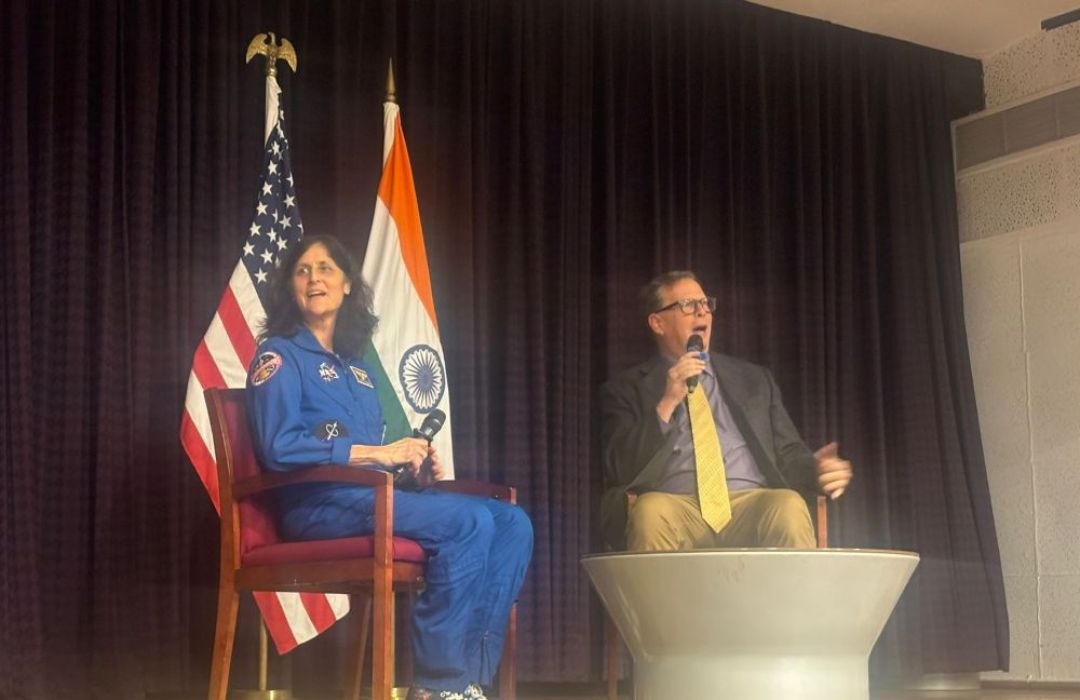
Speaking at an interactive session titled “Eyes on the Stars, Feet on the Ground” at the American Center in New Delhi, Williams said, “When I reached the ISS for the first time, I immediately tried to find India, where my father is from, and Slovenia, my mother’s country.” Her father, Deepak Pandya, hails from Jhulasan village in Gujarat’s Mehsana district, while her mother, Ursuline Bonnie Pandya, is of Slovenian-American descent.
Williams
also expressed regret over missing a meeting with Indian Air Force Group
Captain Subhanshu Shukla aboard the ISS. “I spent nine months in space during
my last mission, but I missed meeting Group Captain Shukla, who reached the
station just after I left,” she said. Shukla travelled to space as part of the
Axiom mission on June 25, 2025.
The 60-year-old astronaut recently retired after a
distinguished 27-year career with NASA, during which she travelled to space
three times and spent a total of 608 days in orbit. She also holds the world
record for the most cumulative spacewalking time by a woman, clocking 62 hours
and 6 minutes.
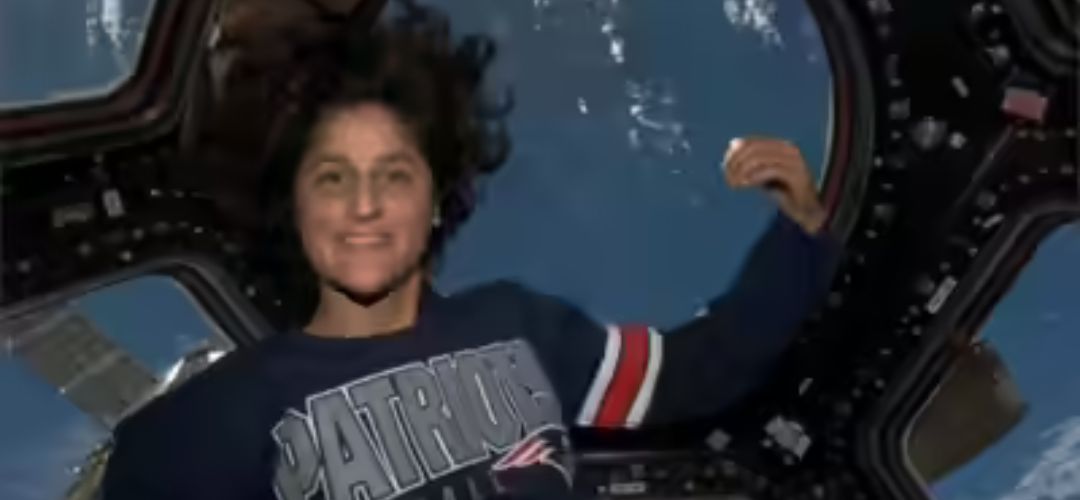
During her final mission in 2024, Williams was originally scheduled for an eight-day stay on the ISS. However, due to a malfunction in Boeing’s Starliner spacecraft, she and crewmate Butch Wilmore remained aboard the station for nearly nine months. They eventually returned safely to Earth on March 18, 2025, aboard SpaceX’s Dragon capsule, after spending 286 days in space.
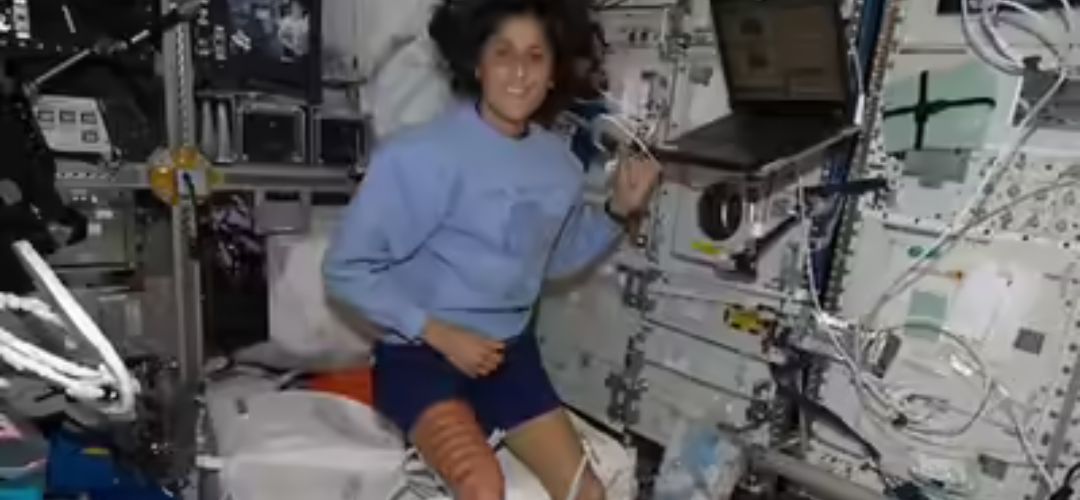
Despite facing health challenges after prolonged
exposure to zero gravity, Williams appeared upbeat in Delhi, encouraging Indian
students to pursue careers in space science and technology. The event was made
emotional when she warmly greeted Sanyogita Chawla, the 90-year-old mother of late
astronaut Kalpana Chawla, who died in the 2003 Space Shuttle Columbia disaster.
Addressing the renewed global focus on lunar
exploration, Williams acknowledged the presence of a modern-day space race. “We
want to return to the Moon sustainably and set rules of engagement so countries
can work together productively and democratically, similar to how Antarctica is
managed,” she said.
She also highlighted the growing role of private
companies in space exploration. “Commercialisation of space is creating opportunities
far beyond rockets and spacecraft - in experiments, satellites, materials
science and even 3D printing,” Williams noted.
Recalling her early years, Williams said she never
initially dreamt of becoming an astronaut. “I grew up watching Star
Trek on a black-and-white TV. After college, my brother encouraged
me to join the military, which led me to become a Navy officer,” she said. She
logged over 3,000 flight hours across more than 30 aircraft types before being
selected as an astronaut.
Williams fondly spoke about her Indian roots,
recalling how she craved Indian food in space. “Someone sent me an Indian dish
in a cargo shipment, and I was thrilled, even though others were making faces,”
she laughed. Known affectionately at NASA as the ‘samosa astronaut’, she also
received 3D-printed models of her dogs while aboard the ISS.
An avid athlete, Williams made history by running
the Boston Marathon in space in 2007, completing it on a treadmill aboard the
ISS in 4 hours and 24 minutes, while her sister ran on Earth.
Sharing one of her toughest moments in orbit,
Williams described a challenging spacewalk during a spacecraft docking
operation, which left her with severe neck cramps after working for over 90
minutes in an awkward position.
During her extended stay on the ISS, Williams and
her crew conducted more than 150 scientific experiments, contributing over 900
hours of research in areas such as microgravity biology, space agriculture and
water recovery systems.
Reflecting on
how space changed her perspective on life, Williams said, “After seeing the
vastness of the universe, I wondered why we argue over small things on Earth.”
She added with a smile, “The first thing I ate after returning home was bread
baked by my husband.”
Join the Rehaab Online WhatsApp group for timely updates (Click here to join the group)