


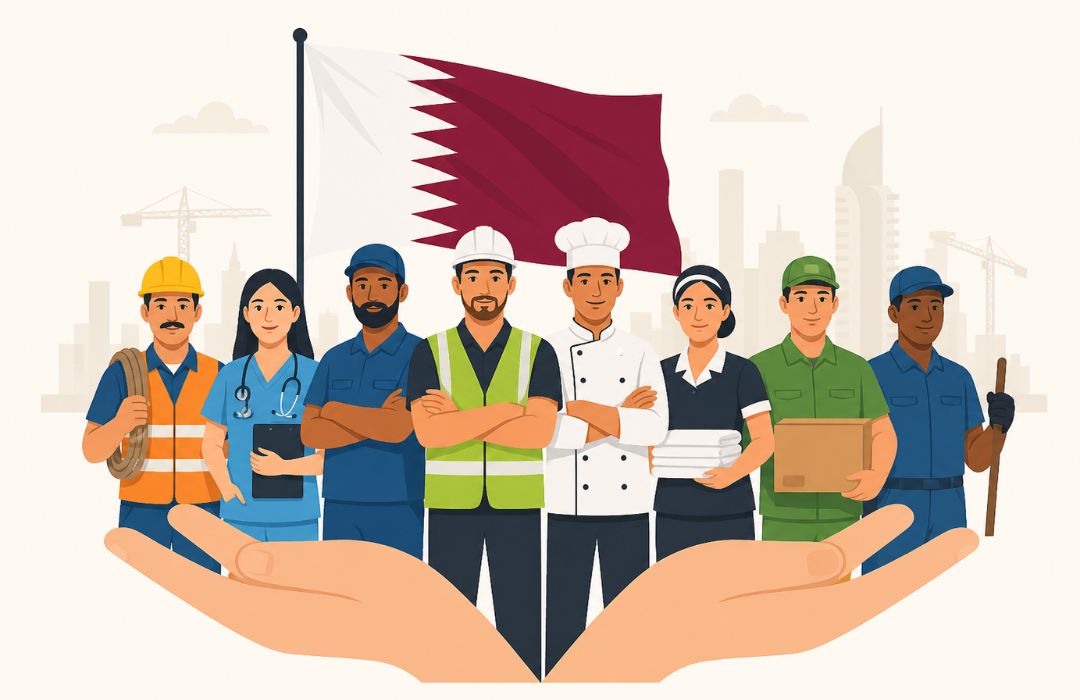

Doha: As the world marks International Workers’ Day on May 1, Qatar’s progressive labour reforms and worker-focused policies are increasingly being recognised as a model for the region. Through well-structured labour regulations, the smooth functioning of the labour market, and strong bilateral agreements with countries worldwide, the nation has successfully integrated labour rights into its broader national development strategy - offering enhanced protection and stability, particularly for expatriate workers.
Over the years, Qatar has introduced a series of
structural reforms aimed at ensuring transparency, accountability, and fairness
in employment practices. These initiatives have significantly strengthened
workers’ rights, improved job mobility, and enhanced overall working and living
conditions across sectors.
Wage
Protection System ensures salary security
One of the most impactful reforms is the Wage
Protection System (WPS), which mandates that workers’ salaries and benefits be
paid through bank transfers. This mechanism allows authorities to closely
monitor wage payments and take prompt legal action against non-compliant
employers.
The system guarantees essential worker benefits, including minimum wage, accommodation allowance, overtime pay, paid weekly rest days, annual leave salary, and end-of-service gratuity - ensuring financial security and dignity for workers.
Strong
legal protection and grievance mechanisms
Qatar has established a robust legal framework
that enables workers to file complaints online in cases of unpaid wages or
violations of employment contracts. These complaints are addressed through
conciliation processes as well as formal legal channels.
Notably, nearly 80 percent of such cases are
resolved through amicable settlements, reflecting the efficiency of the system
and providing timely relief without prolonged legal procedures.
Workers
Insurance and Support Fund strengthens safety net
To further safeguard workers’ rights, the Workers
Insurance and Support Fund plays a vital role in ensuring that employees
receive their dues even in situations where employers fail to pay or when court
rulings face delays.
This financial safety net has proven crucial in protecting workers from unexpected hardships and ensuring continuity in their entitlements.
Easier
job mobility through sponsorship reforms
A
major milestone in Qatar’s labour reforms is the simplification of job change
and sponsorship transfer procedures. By removing earlier restrictions, workers
can now change jobs more freely through the Ministry of Labour’s digital
platforms.
This reform has empowered expatriate workers by offering greater flexibility, reducing dependency on employers, and improving overall job satisfaction and security.
Awareness
and safety initiatives reduce workplace risks
The government continues to prioritise worker
education and safety through extensive awareness campaigns. Various ministries
and agencies regularly conduct programmes on labour rights, workplace safety,
heat stress prevention, cybersecurity, and human rights.
Multilingual booklets are distributed to ensure
accessibility of information for workers of different nationalities. According
to official data, 20,935 workplace inspections and 9,693 awareness programmes
were conducted in 2025 alone, contributing to a notable decline in workplace
accidents.
Inclusive
approach and community engagement
Qatar also adopts an inclusive approach by
engaging with expatriate communities, gathering feedback, and incorporating it
into policy decisions. This ensures that labour reforms remain responsive to
the needs of a diverse workforce.
In addition, the country promotes workers’
well-being through cultural, creative, and sports initiatives. Global
observances such as International Workers’ Day, World Migrants Day, and
International Women’s Day are actively celebrated, reinforcing the importance
of inclusion and recognition.
Special attention is also given to young migrant
workers, ensuring their integration, development, and access to future
opportunities.
With a comprehensive and forward-looking approach
to labour rights, Qatar continues to set a strong benchmark in worker welfare
and protection. These reforms not only safeguard the rights of expatriate
workers but also align with the nation’s long-term vision for sustainable,
inclusive development.
Join the Rehaab Online WhatsApp group for timely updates (Click here to join the group)